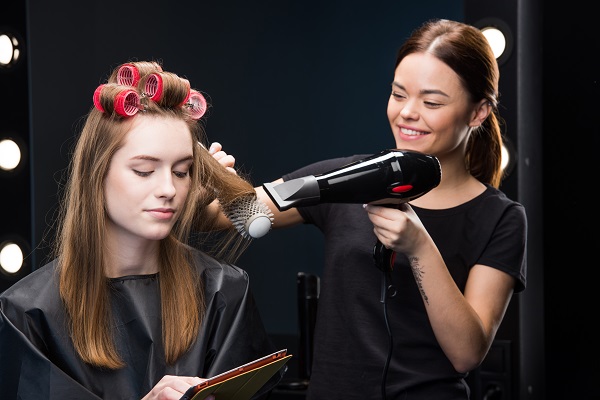
One of our senior PROs put it neatly on a recent walk-and-talk between bookings. "Ten years ago," she said, "a woman would book me because she had a date. Now she books me because she has a Sunday." The job, she added, has not really changed — but the reason a client wants to feel beautiful has.
This piece is a slightly broader look at that change. Where confidence used to come from, where it comes from now, and how a generation that has been online since adolescence is rebuilding self-image in 2026 from a different starting place. Some of it is about lipstick. A lot of it is not.
The "looking good for myself" generation, with caveats
The dominant beauty narrative for most of the last decade has been some version of I do this for me. It is, broadly, true. But it is not the whole picture. The British Beauty Council's 2025 consumer research found that women in their twenties and thirties continue to cite "social occasions" — dates, weddings, work events, the photo that ends up on a friend's phone — as one of the top three triggers for booking beauty services. Self-care is real. Self-care plus a camera in the room is real too.
What has changed is the honesty about it. Younger clients in 2026 are much more direct: yes, I want a lash lift because I am going on a date; yes, I am getting the brows tinted before a brunch I know will be on Instagram. The pretence that beauty is only ever for an audience of one has, mercifully, faded.
Dating fatigue is reshaping the brief
The other shift our PROs talk about is dating fatigue. The standard apps are, by most measures, less fun than they used to be. The UK press has been covering it for years now — pieces like the BBC's coverage of declining dating-app engagement and The Guardian's reporting on burnout among UK singles have made the trend visible. The result, for the beauty industry, is a slightly different client.
That client is less likely to be prepping for a first date this Friday. She is more likely to be prepping for a longer arc — a holiday with friends in October, the first month of a new job, the slow climb back into wanting to feel visible after a long stretch of not. The brief is softer and the timeline is longer. Treatments that grow with you — a good cut, a tint, a slow build of skin treatments — are doing better than one-off "event glam" sessions.
Where digital companionship fits in
Running parallel to all of this is a quieter cultural story: the rise of conversational AI as a low-stakes way of practising connection itself. Mainstream coverage tends to focus on chatbots used for productivity or therapy, but a much larger consumer category sits next to those — adult-only conversational platforms designed around emotional intelligence, memory and the texture of a relationship rather than the transactional Q&A of a search engine.
Services like ai girlfriend 18+ platforms occupy this end of the market. The pitch is not really "replace a partner" — the actual usage data the companies publish suggests most users are in relationships or are using the apps as a kind of journaling-with-feedback. The pitch is more honest than the headlines: a private, judgement-free conversation that remembers what you told it last week. For a generation that grew up texting and feels more articulate in writing than in person, that is not a strange product. It is an obvious one.
The relevant question for beauty is not whether these apps are "good" or "bad" — that conversation is being had elsewhere and the answer probably depends on the person. The relevant question is what they are competing with for emotional bandwidth, and what they are freeing up. Several of our PROs have noticed that clients who use journaling-style apps, AI or otherwise, often arrive at appointments more able to articulate what they actually want from the session. "Soft, warm, confident, not bridal" instead of "I dunno, just nice." That is, on the PRO side, a useful change.
Confidence is being un-bundled from validation
If there is one through-line in everything above, it is this: the loop between "looking good" and "feeling confident" used to run through somebody else's eyes. A boyfriend's, a stranger's on the street, a comment under a photo. In 2026 the loop is being un-bundled.
Some women are routing confidence through skill — a slow, patient skincare practice, learning to do their own brows, taking a wig styling class. Some are routing it through community — group bookings with friends, mother-daughter sessions, hen-do PRO parties. Some are routing it through privacy — a conversation, a journal, a quiet evening with the phone face-down. And some, increasingly, are using digital companionship apps as a kind of reflective surface that does not flinch or judge. None of these replace each other. They stack.
The job of a beauty platform in this landscape is not to compete for the woman's whole emotional life. It is to make the physical, in-person part of feeling good as frictionless and high-quality as possible — and then to get out of the way.
What our PROs are actually doing about it
A handful of practical shifts our editorial team has noticed in PRO behaviour this year:
The opening conversation at appointments is longer. Most senior PROs now spend the first five minutes asking about the week, the mood, the occasion — not about colour palettes. The brief that comes out of that conversation tends to be better.
Treatments are being recommended on longer arcs. A skin consultation today is more likely to come with a three-month plan than a single appointment. Clients seem to want the trajectory, not just the event.
Aftercare is more personal. PROs are sending follow-ups two or three days after appointments, asking how the brows have settled or whether the lift has held. It is small. It also matters.
The honest bottom line
Confidence in 2026 looks less like a single hero photograph and more like a string of small, repeated decisions. A good haircut you go back to. A skincare routine you actually do. A friend who can do your eyeliner on a holiday. A conversation — with another person, with yourself, with a journal, with a chat app — that helps you say out loud what you want.
Beauty is one of those decisions. It is not the only one, and we would be the wrong platform to pretend it was. But done well, with a PRO who listens, it is a quiet engine for the rest. Which is, more or less, what GLAM LAB exists to make easy.
If you found this useful, our companion piece on 2026's actual booking-out beauty trends is the practical follow-up — what to ask the PRO for once you know how you want to feel. And our long-read on why the on-demand model has spread so fast across consumer categories covers the structural side of the same story.